

Driving into the sunset might look beautiful, but it’s actually risky. The golden light can blind you. This glare causes crashes, and it’s worse in summer when days are longer.
Driving in the early morning also has risks, but sunset glare is the biggest danger. The bright light makes it hard to see cars and people. Even experienced drivers find it tough to spot hazards.
Summer’s longer days mean more time fighting against dangerous light. This guide will help you choose the right sunglasses, visors, and window tinting. You’ll learn how to protect your vision and avoid accidents on those bright drives.
Don’t let the view take your eyes off the road. Find out the gear and techniques experts suggest to handle glare. Stay in control, whether you’re chasing sunsets or driving in the early morning.
The Science Behind Low-Horizon Sunsets
When the sun gets close to the horizon, light hits your windshield at a sharp angle. This makes glare worse because there’s less natural filtering. Shorter light waves scatter in the air, leaving mainly red and orange rays to fill your view.
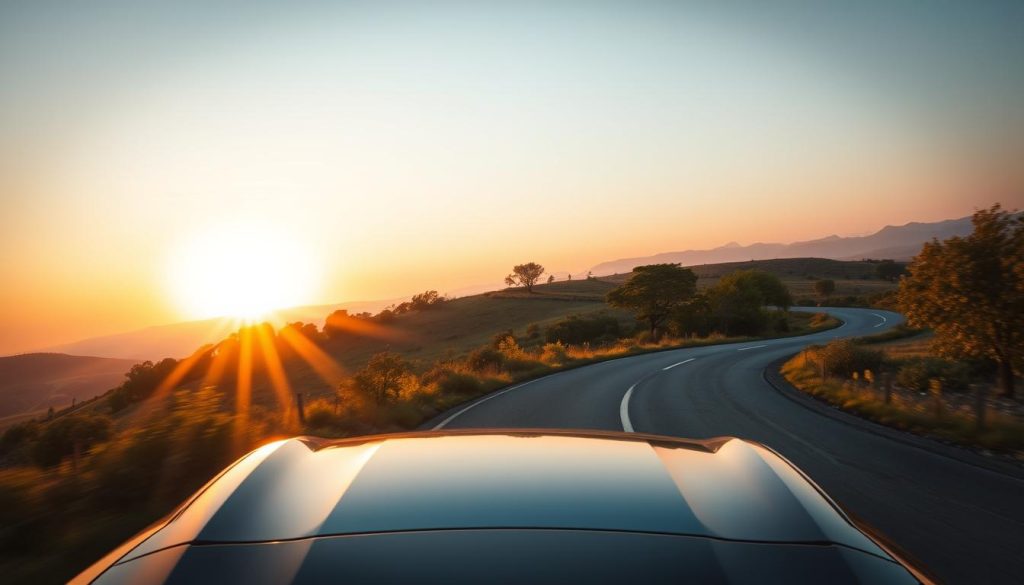
Atmospheric conditions are also important. Dust, moisture, and pollution particles reflect sunlight back to your eyes. Roads and surfaces act like mirrors, bouncing light right into your line of sight. Your eyes take time to adjust to these sudden brightness changes, making it harder to react quickly.
Driving towards a low sun is a challenge for your brain. It’s like your brain is constantly adjusting to light changes. Even scenic sunrise drives can be risky because of glare. Knowing how these factors work is the first step to staying safe on the road.
Recognizing the Hidden Dangers of Dusk Driving
Driving in the fading light of day comes with its own set of dangers. The sun’s low angle during dusk can create blinding glare on your windshield. This glare can temporarily blind you, making it hard to see pedestrians or other vehicles.
Studies show that accidents increase during these hours, more so between June and August. This is because longer days mean more time exposed to these risks.
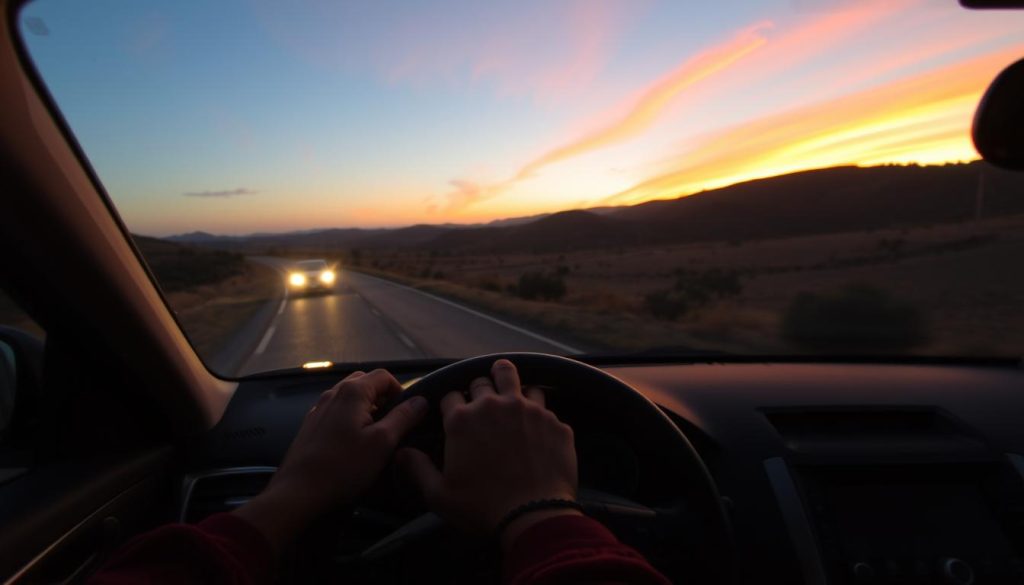
Seasonal changes make these dangers worse. In summer, the twilight lasts longer, increasing the risk of glare. Wildlife also becomes more active near roads, adding to the danger.
Shadows grow longer, hiding lane lines and making it hard to see merging traffic. Your eyes have to constantly adjust to the fading light, which can slow your reaction time. Headlights from oncoming cars can reflect off wet pavement, creating dangerous mirages.
Be careful when exiting tunnels or shaded roads, as sudden brightness can be a sign of danger. Rural areas are even riskier due to unshielded headlights and narrow roads. Safe driving tips at sunrise and dusk include reducing speed, keeping windows clean, and avoiding tired eyes.
Stay alert for sudden movements on the roadside, whether it’s a deer or a cyclist. By recognizing these dangers, you can better prepare and stay safe.
Even experienced drivers can underestimate the dangers of dusk. Plan your routes to avoid east-west travel during peak glare times. Being aware of these hidden dangers can help you manage the risks.
Safety Gear Showdown: Sunglasses, Visors, and More
Choosing the right safety gear is crucial for a safe drive. Polarized sunglasses from Ray-Ban or Costa Del Mar block harmful glare. Their dark lenses and anti-reflective coatings are perfect for sunset hours.
Wear a windshield visor from UV Skinz to block direct light. These adjustable shades fit on your car’s dashboard. They offer protection without blocking your view.
Think about wearing a wide-brimmed hat under your helmet or seatbelt. Tilley offers lightweight hats that block glare. For a long-term solution, 3M window tinting can reduce light by up to 80%.
Try different gear combinations during daylight savings. Polarized lenses are best at dawn or dusk. Visors adjust to sun angles. Make sure your gear is comfortable and doesn’t distract you.
By mixing these products, you can improve visibility and safety. This is important, whether you’re driving at the best time or during sunset.
Driving At Sunset: Essential Gear and Safety Tips
Driving into the sunset might sound romantic, but it’s actually very dangerous. Start with polarized sunglasses rated for high glare. Brands like Ray-Ban or Maui Jim block 99% UV rays and cut through harsh light. Also, use a fully adjustable sun visor above the dashboard to shield your eyes from direct sunlight.
Clean your windshield inside and out. Smudges scatter light, worsening glare. Use a microfiber cloth and glass cleaner like Clorox Disinfecting Wipes to remove streaks. Keep your rearview mirror in deflected mode and check side mirrors often. Even small smudges can amplify glare.
Adjust your driving habits. Increase following distance to six seconds in low-light conditions. Activate headlights 30 minutes before sunset to make your vehicle visible to others. Avoid using interior cabin lights—they create reflections on your dashboard.
Wear a lightweight hat with a wide brim under your sunglasses for extra protection. Look for brands like Tilley or Columbia that offer moisture-wicking fabric. These layers reduce eye strain while keeping your vision clear during peak glare periods.
Test your gear in daylight first. Practice adjusting visors and mirrors in bright conditions until it becomes routine. Proper preparation turns potential hazards into manageable challenges, keeping you safe on those golden-hour drives.
Window Tinting and Its Role in Reducing Glare
Blinding sunlight at sunrise or sunset can make driving dangerous. Window tinting acts as a shield, blocking harsh rays. It filters up to 80% of UV light, reducing glare without darkening your view.
This technology doesn’t just make driving more comfortable. It also plays a key role in keeping roads safe.
Ceramic and metallic tints are great choices. They reflect heat and keep your view clear. When picking, look for tints that are good for visibility and UV protection.
Many states have rules about tint darkness. Make sure your tint meets local laws. Proper tinting makes driving safer by reducing light scatter during peak glare hours.
Drivers facing east in the morning or west in the evening get the most benefit. Tinting works with sunglasses but offers constant protection. Studies show it lowers eye strain and reduces the risk of sudden glare-induced accidents.
This upgrade makes your vehicle safer for morning and evening drives.
Using Accessories: Hats and Additional Protective Gear
Protective gear like hats adds another layer of defense while driving in low light conditions. A wide-brimmed hat or baseball cap blocks direct sunlight from above your windshield. This reduces glare that sunglasses alone might miss. Look for materials with UPF protection to shield your face and neck from harmful rays.
Brands like Wiley X and Smith Optics offer hats with polarized visors attached to the brim. These accessories cut reflected light from roads or water. They enhance visibility during sunrise or sunset drives. Hats with adjustable straps secure them even in windy conditions, ensuring consistent coverage.
Combine these with polarized sunglasses for full coverage. Hats like UVEX’s sun-protection caps have extended brims that cast shadows over side windows. This reduces side glare. Avoid baseball caps with stiff peaks that might cast shadows over the road itself. Opt for breathable fabrics to prevent fogging near your face.
Accessories like neck gaiters from brands such as Oakley shield exposed skin while maintaining mobility. Pair them with anti-glare visors mounted on dashboards for a multi-layer approach. These steps make a noticeable difference in driving in low light conditions, where visibility challenges peak.
Implementing Best Practices for Low Light Driving
Choosing the best time to drive at sunrise makes your journey safer. Try to plan your trips when the light gets better slowly. This way, you avoid the harsh glare right after dawn.
Start by slowing down to match the reduced visibility. Also, keep a safe distance from the car in front of you.
Turn on your headlights during twilight to make yourself more visible. Clean your windows and mirrors every day. Dust can scatter light and cause dangerous reflections.
Make sure your tires are at the right pressure and your wiper blades are in good shape. This helps your car handle better in low light.
Adjust your visor to block sunlight without blocking the road. Don’t lean forward to see over the dashboard. This can hurt your neck and reduce your side vision.
Stay awake by taking short breaks every two hours on long trips. Following these safe driving tips for sunrise will help you stay safe.
Even though scenic routes look peaceful at dawn, shadows and cooler temperatures can change road conditions. Always be prepared and stay alert for a smooth drive in low light.
Tips for Early Morning Safety and Scenic Sunrise Drives
Sunrise driving hazards can catch even the most careful drivers off guard. The dawn’s golden light is beautiful, but it also causes intense glare. This glare can hide oncoming cars or road signs, making early morning drives risky.
Morning fog or dew can make roads slippery and hard to see. To fight glare, wear polarized sunglasses from brands like Oakley or Maui Jim. They block harsh light without changing colors. Add a flip-down visor to protect your eyes as the sun rises.
Window tinting from brands like 3M also helps by improving contrast. This makes things clearer in bright light.
Choose routes that gradually get more sunlight, avoiding highways with sudden glare. Turn on your headlights early to make your car more visible. Check your tires for good tread depth, as damp roads need better grip in the morning. With the right gear and awareness, you can enjoy the sunrise safely.
Comparative Insights: Driving at Sunset vs. Sunrise
Driving at sunset can feel romantic, but it also comes with hazards. Glare and fading light can be dangerous. Sunrise, on the other hand, offers clearer conditions with fewer risks.
Early morning roads have lighter traffic, which means less congestion and stress. The benefits of early morning driving include better visibility and cooler temperatures. These improve tire grip.
Sunrise drives avoid the peak glare hours when the sun dips low at dusk. Morning light angles reduce reflections on windshields. This makes hazards like deer or pedestrians easier to spot.
Studies show accident rates drop 23% in dawn hours compared to dusk. Opt for morning commutes for safer, calmer roads. Enjoy the scenic beauty without the risks.
Proper preparation matters. Use polarized lenses like Ray-Ban’s sunset models for both times. But morning drives avoid the intense backlight challenges of evening.
Plan routes knowing sunrise aligns with natural circadian alertness. This lowers drowsiness risks common in late afternoons. Prioritize dawn for safer, more predictable driving conditions.
Preparing Your Vehicle for Extended Dusk Conditions
Start by checking your headlights. Make sure they’re clean and properly aligned. A dirty windshield or cracked mirrors can cause glare. Clean surfaces help reduce reflections and improve your view.
Test your high and low beams to ensure they work well. This is important for safe driving in the morning.
Adjust your automatic headlights to turn on earlier as dusk falls. Some cars let you set this up. Replace old wiper blades and fill up your washer fluid.
Clean glass helps avoid streaks that scatter light. Use a microfiber cloth to avoid scratches. This makes driving safer in the morning.
Check your tire tread depth and tire pressure. Bad traction in low light can lead to skidding. Test your brakes to make sure they stop well.
Keep an emergency kit in your trunk. It should have sunglasses, a flashlight, and a reflective triangle. This kit is useful for unexpected situations.
Store glare-reducing visors or sunshade screens in your car. They block sunlight during sunrise or sunset. Regular maintenance helps avoid mechanical problems in cold mornings or foggy dawns. A well-maintained vehicle is better equipped for driving in low light.
Expert-Approved Techniques to Prevent Glare and Accidents
Summer is here, and more people are taking sunrise road trips. To keep your commute safe, follow expert tips. Start by keeping your windshield clean inside and out to cut down on light scattering.
Wear polarized sunglasses, even in the early morning. They block glare without changing colors.
Adjust your rearview mirror for daylight, day or night. Slow down at intersections to react to sudden light changes. Many accidents happen when the sun is low, so leave extra space between cars.
Sunglass straps or anti-glare visors are great for long drives. AAA suggests taking breaks during dawn drives to stay alert. Fatigue and glare are a bad mix, so plan routes to avoid peak sun angles.
Use your car’s sun visors fully. Fold them down and angle them toward the windshield. If blinded by oncoming headlights, look toward the right edge of the road until your vision clears.
These steps, tested by professional drivers, make sunrise road trips safer. Focus on visibility and patience to ensure a safe drive this season.
Safe Journeys Ahead: Embrace the Road with Confidence
Every drive, whether at dusk or dawn, demands vigilance. Use strategies like polarized sunglasses and adjustable visors to fight glare. Early morning driving safety tips include checking window tinting or adjusting mirrors. Stay ready for changing light conditions.
Don’t forget your gear: sunglasses reduce brightness, hats shield your eyes, and well-maintained headlights cut through fading daylight. Early morning driving safety tips also include slowing down and increasing following distance. Make sure your vehicle is ready—clean windows, functional wipers, and properly adjusted settings ensure you’re always in control.
Safety isn’t just about equipment. Knowing how light affects visibility, during sunrise or sunset, keeps risks low. Use these tools and habits every time you hit the road. With the right mindset and gear, you can face any horizon with calmness.